Retro Burger Cartoon Character Design: Groovy Vibes for Your Projects
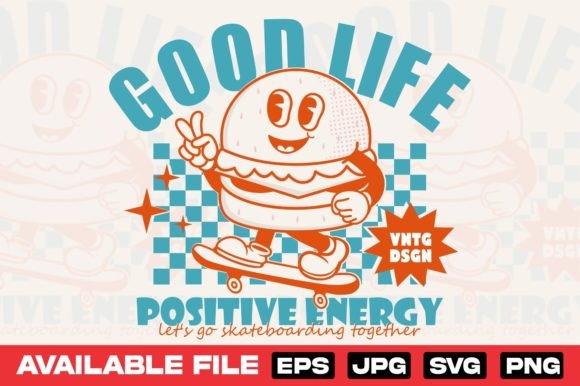
There’s something undeniably magnetic about a cartoon burger wearing shades, shredding on a skateboard, and living its best life. That’s the core of a Retro Burger Cartoon Character Design—it’s not just an image; it’s a mood. This kind of groovy vector illustration taps into a powerful wave of nostalgia, blending 70s and 80s aesthetics with a playful, modern sensibility that instantly connects with audiences. For designers, entrepreneurs, and creators, it’s more than a fun graphic; it’s a versatile asset that can inject personality into almost any project, from branding to merchandise.
Why This Groovy Style Captures Attention
Visual appeal in design often boils down to character and emotion. A retro-styled burger character on a skateboard does several things at once. The "good life" slogan and the action pose create a narrative of fun, freedom, and indulgence. The retro aesthetic—think bold outlines, limited but vibrant color palettes, and slightly exaggerated proportions—evokes a sense of authenticity and warmth that highly polished, modern graphics sometimes lack. This style feels handmade and approachable, making it perfect for brands that want to appear friendly, energetic, and a little bit cheeky.
From a technical standpoint, the fact that this is a 100% vector illustration is crucial. Unlike raster images that pixelate when resized, vector shapes are mathematically defined, allowing you to scale the design from a tiny sticker to a massive banner without losing an ounce of quality. This makes the included files—EPS, SVG, JPEG, and PNG—exceptionally practical for real-world applications. The high-resolution PNG with a transparent background is ready for immediate use on digital platforms or for quality printing, solving a common headache for creators who need assets that work seamlessly across different media.
From Screen to Street: Practical Applications
The true value of a design asset lies in its adaptability. Here’s how a Retro Burger Cartoon Character Design can be leveraged across various creative and commercial projects:
- Branding & Logo Design: For a food truck, a casual restaurant, a burger joint, or even a retro-themed podcast, this character can become the heart of the brand identity. It’s memorable, ownable, and tells a story at a glance. Imagine it as the centerpiece of a logo or as a recurring mascot across menus and signage.
- Merchandise & Apparel: This is where the design truly shines. Its bold, simple shapes are ideal for t-shirt printing, hoodies, mugs, and stickers. The groovy vibe appeals to a broad demographic, making it a strong candidate for print-on-demand stores or limited-edition merch lines. The included file formats ensure compatibility with virtually any printing service.
- Packaging & Marketing Collateral: Use the character to add a pop of personality to food packaging, box designs, or promotional flyers. It can serve as a fun spot illustration on a menu, a playful element on a social media graphic, or an engaging visual on a website’s "About Us" page.
- Digital Content & Social Media: In the fast-scrolling world of social media, distinctive visuals stop thumbs. This character can be used as a profile picture, an animated sticker in Stories, a themed post series, or a standout graphic for a blog header. Its inherent fun factor boosts shareability and audience engagement.
- Invitations & Editorial Design: Think beyond commercial use. This illustration could liven up a birthday party invitation for a foodie friend, add flair to a zine, or provide quirky spot art for a magazine article about food culture or retro trends.
Making It Work for Your Brand Identity
Integrating a strong visual element like this requires thoughtful execution to ensure it enhances rather than overwhelms. The key is alignment with your project’s goals and audience.
Match the Vibe to the Message: The "good life" slogan and skateboard imply motion, joy, and a carefree attitude. This works perfectly for brands promoting fun, leisure, or indulgence. It might be less suitable for a serious financial advisor, but it’s ideal for a youth-oriented clothing line, a snack brand, or a community event.
Consider Color and Composition: The retro palette is part of its charm, but the design’s vector nature means colors are easy to modify. You can adjust the hues to match your existing brand colors or create seasonal variations. Because the character is a self-contained illustration, it can be used as a standalone hero image or integrated into a larger layout as a supporting element.
Ensure Readability in Context: While the character itself is the star, any accompanying text needs to be legible. If you’re placing it on a busy background or pairing it with a slogan, choose a complementary font pairing. A clean, bold sans-serif can balance the illustration’s playful curves, while a groovy retro script could amplify the theme if used carefully. Always test the combination at the intended size to ensure clarity.
Leverage for Consistency and Recognition: Using the same character across multiple touchpoints—website, social media, packaging, merchandise—builds a cohesive visual language. This repetition strengthens brand recognition. Customers begin to associate the friendly, lively character with your business’s personality, making your brand more memorable in a crowded marketplace.
Choosing and Using Your Design Files Wisely
Having the right files is half the battle. Here’s a quick guide to using the included formats effectively:
- EPS & SVG: These are your editable workhorses. Open them in vector software like Adobe Illustrator or the free alternative Inkscape to resize, recolor, or modify individual elements. This is essential for creating custom logo designs or adapting the illustration for specific print requirements.
- PNG (Transparent): This is your ready-to-use file for digital applications. The transparent background allows you to place the burger character over any color, photo, or pattern without a white box around it. Use it directly in social media posts, on websites, or in presentations. The 300 dpi resolution ensures it looks crisp even when printed on smaller items like stickers.
- JPEG: A universally compatible format for quick previews or use in contexts where transparency isn’t needed, like a blog post image.
Before finalizing any project, always consider the commercial licensing terms of the assets you use. Ensure the license covers your intended use, whether it’s for client work, merchandise for sale, or internal projects. This due diligence protects you and your business legally.
Ultimately, a Retro Burger Cartoon Character Design is more than a clipart burger. It’s a storytelling tool, a brand ambassador, and a dose of visual joy. Its strength lies in its ability to communicate a specific, positive emotion quickly and across a vast array of mediums. By understanding its personality and applying it strategically, you can transform a fun illustration into a powerful asset that engages your audience and gives your projects a distinct, memorable voice.